The Most Popular Card Games Around the World
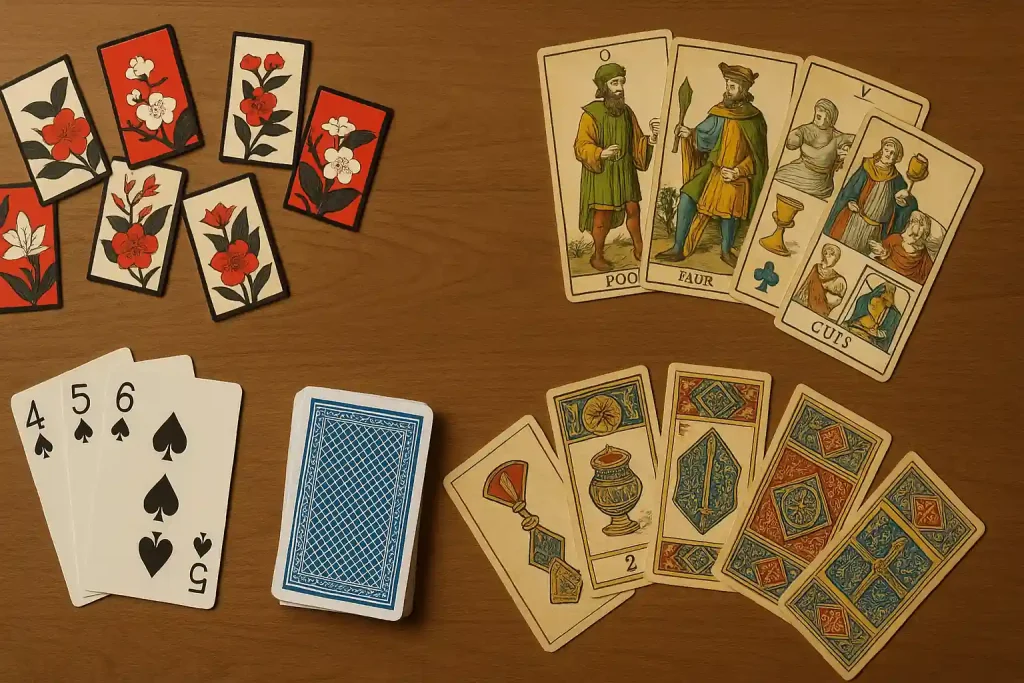
Playing cards have entertained human societies for over a thousand years. Originating in ancient East Asia before spreading along trade routes into the Middle East and Europe, simple decks of paper and woodblock prints evolved into a universal form of social recreation. Today, card games transcend geographical borders, language barriers, and age groups. While some games have achieved global dominance through professional tournaments and digital apps, other traditional games remain deeply tied to regional identity and cultural heritage.
Across different continents, people gather around kitchen tables, coffee house counters, and community halls to test their strategy, luck, and psychological grit. Understanding the most popular card games around the world offers a fascinating glimpse into how different cultures engage in competition, community, and leisure.
Strategic Global Icons
Certain card games have expanded beyond their countries of origin to become global institutions. These games feature standardized rules, international sanctioning bodies, and millions of active players worldwide.
Texas Hold’em Poker
Texas Hold’em stands as the undisputed king of competitive card games. Emerging in the early twentieth century in Texas, this community card variation of poker exploded in global popularity during the early 2000s due to televised tournaments and online platforms.
-
Objective: Players aim to form the best five-card hand using a combination of two private hole cards and five shared community cards.
-
Key Mechanics: Betting rounds occur before the flop, turn, and river, requiring players to evaluate risk, calculate pot odds, and read opponent behavior.
-
Cultural Impact: Texas Hold’em has transitioned from backroom saloons to a major televised sport, with event champions earning millions in prize money.
Contract Bridge
Contract Bridge, commonly known simply as Bridge, represents the pinnacle of complex trick-taking card games. Developed from nineteenth-century Whist, Bridge gained widespread popular traction in the 1930s through the efforts of American authority Harold Vanderbilt.
-
Objective: Played by four players in two competing partnerships, the goal is to win tricks to fulfill or defeat a contract established during an initial bidding phase.
-
Key Mechanics: The game divides into two distinct phases: bidding, which functions as a coded communication system between partners, and play, where tactical card placement determines trick outcomes.
-
Cultural Impact: Recognized by the International Olympic Committee as a mind sport, Bridge boasts organized federations across North America, Europe, and Asia.
Blackjack
Blackjack, derived from the French game Twenty-One, is the most widely played casino banking game in the world. Its appeal rests on simple rules paired with rigorous underlying mathematical strategy.
-
Objective: Players compete against the dealer to construct a hand total as close to 21 as possible without exceeding it.
-
Key Mechanics: Card values are straightforward, with face cards worth ten and aces valued at one or eleven. Players decide whether to hit, stand, double down, or split pairs based on dealer indicators.
-
Cultural Impact: Blackjack has inspired extensive literature regarding probability and card counting, making it a cornerstone of gaming tables from Las Vegas to Macau.
Traditional European Favorites
Europe possesses a rich tapestry of national card games. Many of these utilize custom regional decks rather than the standard French-suited 52-card deck.
Skat in Germany
Skat is Germany’s national card game, born in the city of Altenburg during the early nineteenth century. Played with a 32-card deck, it is celebrated for its deep tactical strategy and minimal reliance on pure luck.
-
Format: Skat is a game for three players. In each round, one soloist plays against a defensive partnership of two.
-
Bidding System: An intricate bidding process determines who becomes the soloist and selects the trump suit or game mode.
-
Community Significance: Skat is taken so seriously in Germany that official disputes can be brought before the German Skat Order in Altenburg.
Belote in France
Belote is the quintessential French card game, played in cafes and living rooms across the country since its introduction in the 1920s.
-
Deck and Structure: Uses a stripped 32-card deck played by four people divided into two teams.
-
Trick Mechanics: It is an ace-ten trick-taking game where players receive points for collecting high-value cards and declaring specific card combinations like the King and Queen of trumps.
-
Social Role: Belote remains a fundamental Sunday afternoon tradition for families throughout France and parts of North Africa.
Briscola and Scopa in Italy
Italy boasts two distinct national pastimes, both typically played with traditional 40-card Italian decks featuring suits like swords, cups, coins, and clubs.
-
Briscola: A fast-paced trick-taking game focused on capturing high-point cards while managing a designated trump suit.
-
Scopa: A popular fishing game where players take cards from the table by matching their numerical values with cards from their hand. Clearing the entire table earns a special point called a scopa, which translates to broom.
Durak in Russia and Eastern Europe
Durak, which translates to fool, is the most popular card game across Russia and post-Soviet states. It uses a 36-card deck and operates without a singular winner.
-
Gameplay Concept: Instead of competing to win, players attack and defend against each other to avoid being the last remaining player holding cards.
-
The Defeated Player: The final player left with cards is declared the durak and must handle administrative tasks like shuffling and dealing the next round.
Popular Games in Asia and the Subcontinent
Card games across Asia often combine traditional set-building mechanics with rapid social interactions and strategic card shedding.
Teen Patti and Indian Rummy
In South Asia, card games are deeply tied to festival culture, hospitality, and family gatherings.
-
Teen Patti: Translating to three cards, Teen Patti is a simplified betting game akin to three-card brag. It is particularly prominent in India during Diwali celebrations, where playing cards is considered lucky.
-
Indian Rummy: A fast-moving variation of classical Rummy, Indian Rummy requires players to organize 13 cards into valid sequences and sets. It has seen explosive growth in the digital era due to legal skill-based online platforms.
Big Two
Big Two, also known as Deuces, originated in China and dominates card play across East Asia, including Hong Kong, Taiwan, and the Philippines.
-
Category: It belongs to the shedding family of games, where the primary goal is to empty your hand before opponents do.
-
Hierarchy: The number two holds the highest rank in the deck, beating aces and kings. Cards can be played as single cards, pairs, or five-card poker hands.
Card Games of the Americas
The Western Hemisphere has generated several classic games that blend european roots with local innovations.
Canasta in South America
Originating in Uruguay during the late 1930s, Canasta quickly spread across Argentina and North America in the mid-twentieth century.
-
Mechanism: A member of the Rummy family, Canasta uses two full decks with jokers. Players strive to make melds of seven cards of the same rank, known as a canasta.
-
Tactical Depth: Managing the discard pile requires sharp memory, as picking up the pile can alter the entire momentum of the match.
Euchre in North America
Euchre is a trick-taking game played primarily in the Midwestern United States, Canada, and Australia.
-
Fast-Paced Action: Played with a stripped deck of 24 cards, rounds are brief and intense.
-
The Trump Power: The game introduces unique mechanics, such as making the Jack of the trump suit the highest card, known as the Right Bower.
Loteria in Mexico
Loteria functions as a pictorial card game similar to traditional bingo.
-
Structure: Instead of numbers, a announcer draws cards featuring illustrated cultural icons like the sun, the mermaid, or the moon.
-
Participation: Players mark corresponding spaces on their individual boards using dried beans or plastic tokens until someone completes a designated pattern.
Key Factors Behind Global Popularity
The enduring global success of card games relies on several universal factors:
-
High Accessibility: Standard card decks are inexpensive, portable, and require minimal space to play.
-
Dynamic Social Interaction: Card games facilitate conversation, psychological reading, and friendly rivalry without requiring digital screens.
-
Blend of Skill and Luck: Even novice players can defeat experts in a single hand through lucky card draws, yet deep mathematical strategy guarantees long-term success for skilled individuals.
-
Digital Evolution: Online gaming applications have allowed global communities to practice traditional regional games anywhere at any time.
Frequently Asked Questions
What is the origin of the four standard card suits used today?
The modern suits of Hearts, Diamonds, Clubs, and Spades originated in France around 1480. They were simplified adaptations of earlier Germanic suits like Acorns, Bells, Leaves, and Hearts, designed to streamline mass production using stencils.
Which card game has the largest total player base worldwide?
Solitaire, in its digital formats like Klondike, holds the record for total lifetime digital players due to its pre-installation on personal computer operating systems since the early 1990s. For multiplayer games, Poker and Indian Rummy maintain the largest active player communities.
How do custom regional decks differ from standard French decks?
Regional decks alter the suit symbols, card counts, and court card designs. For instance, Italian decks use 40 cards with Cups, Swords, Coins, and Clubs, while traditional German decks use 32 cards with Suits of Acorns, Leaves, Hearts, and Bells.
What distinguishes a trick-taking game from a shedding game?
In trick-taking games like Bridge or Belote, players play one card per round to win a central pile based on card rank or suit dominance. In shedding games like Big Two or President, the objective is to discard all cards from your hand into a shared pile by playing higher-ranked combinations.
Why do certain countries use stripped decks for traditional games?
Stripped decks, which remove lower numerical cards like twos through fives or sevens, were created to increase card density and force higher scoring action in every hand. This dynamic keeps games fast-paced and unpredictable.
Are card games generally classified as games of skill or games of chance?
Most traditional card games are legal hybrids. While individual hand deals rely on random chance, long-term success in games like Bridge, Poker, and Rummy depends heavily on player skill, mathematical evaluation, memory retention, and strategic choice.
How did playing cards originally spread from Asia to Western Europe?
Playing cards originated in China during the Tang Dynasty and traveled westward across trade routes to Mamluk Egypt. Italian and Spanish merchants encountered Mamluk playing cards in the late fourteenth century, bringing the concept into European ports where local variations quickly multiplied.